

 Image 1 of 1
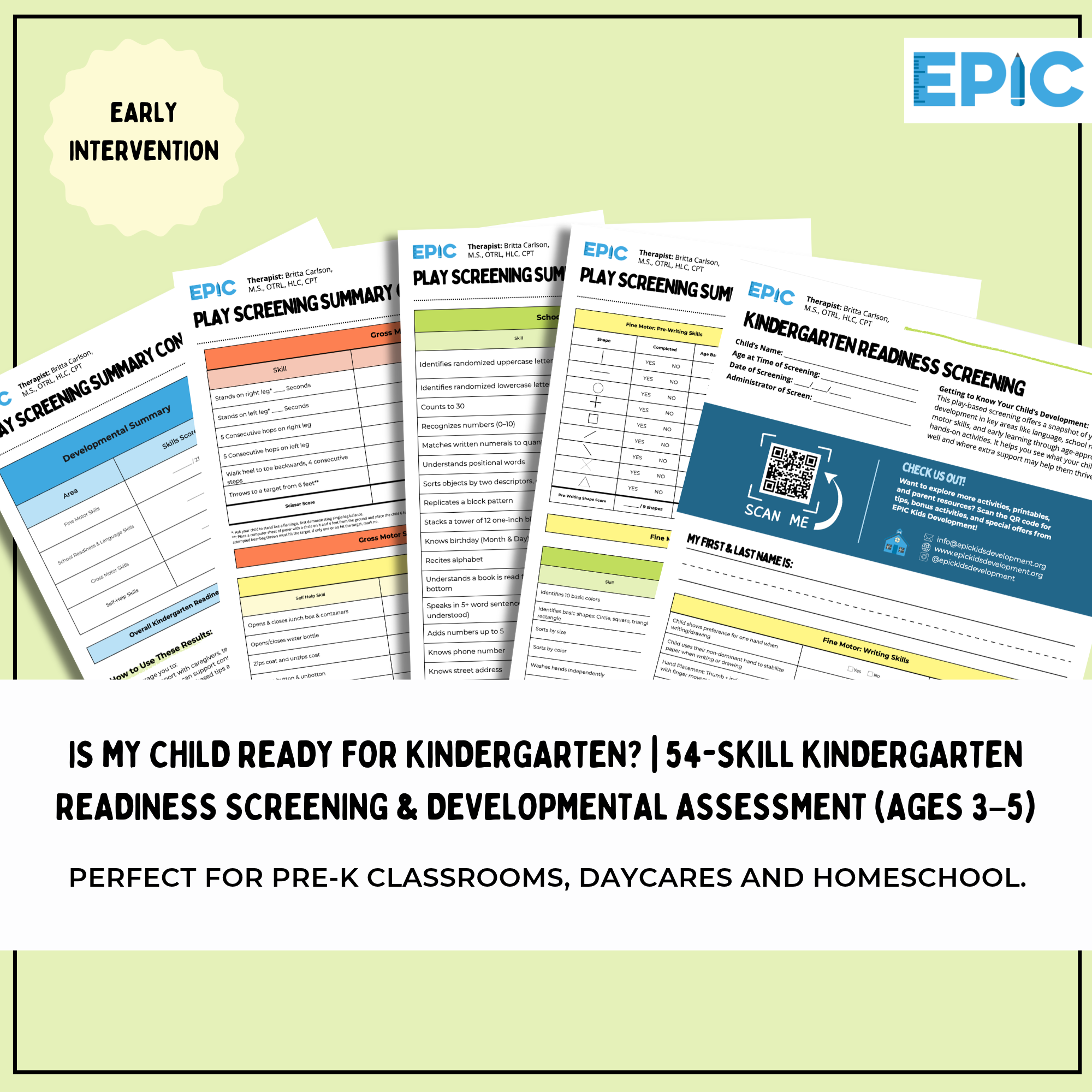
Kindergarten Readiness Screening Tool 54-Skills (Ages 3–5)
Is your child ready for kindergarten? Discover the skills your child has mastered, identify areas that may need extra support, and gain a clearer understanding of their school readiness with this comprehensive, play-based Kindergarten Readiness Screening Tool from EPIC Kids Development.
Created by pediatric occupational therapist Britta Carlson, M.S., OTR/L, this printable resource helps parents, caregivers, educators, and early childhood professionals explore the foundational skills children need for a successful transition into kindergarten.
Unlike a basic developmental checklist, this structured screening tool allows you to observe, document, and track 54 developmental skills through age-referenced, hands-on activities.
What's Inside:
54 Kindergarten Readiness Skills: Explore developmental abilities across four essential areas: Fine Motor, School Readiness & Language, Gross Motor, and Self-Help.
Fine Motor & Pre-Writing Assessment: Observe pencil grasp, handwriting readiness, shape copying, scissor skills, and early writing abilities.
Academic & Language Readiness: Explore letter and number recognition, counting, early math, shapes, colors, language development, and foundational classroom skills.
Gross Motor Development: Assess balance, hopping, coordination, and other movement skills important for participation in school activities.
Self-Help & Independence: Track practical skills like managing lunch containers, dressing, zipping coats, and putting on shoes.
Age-Referenced Milestones: Compare observed skills with the developmental age ranges provided throughout the guide.
Developmental Scoring Summary: Record completed skills and calculate percentages across developmental areas to identify strengths and opportunities for growth.
Practical Next Steps: Discover activity suggestions to support emerging skills and encourage continued development.
Why Kindergarten Readiness Matters
Kindergarten success involves much more than knowing letters and numbers. Children also need the motor coordination to use classroom tools, the independence to manage daily routines, and the communication skills to participate in learning.
From cutting with scissors and writing their name to balancing on one foot, recognizing numbers, and opening their own lunchbox, this screening helps you understand what your child can do today and which skills to practice next.
Whether you're a parent preparing your child for their first day of school or an early childhood professional looking for a structured way to document developmental skills, this resource provides a practical starting point for supporting school readiness.
Give your child a confident start to kindergarten! Download your Kindergarten Readiness Screening Tool today and discover their strengths, emerging skills, and next steps for growth.
This resource is an educational, play-based developmental screening checklist. It is not a standardized or validated assessment and does not replace a comprehensive developmental evaluation by a qualified professional. Individual developmental timelines vary.