

 Image 1 of 1
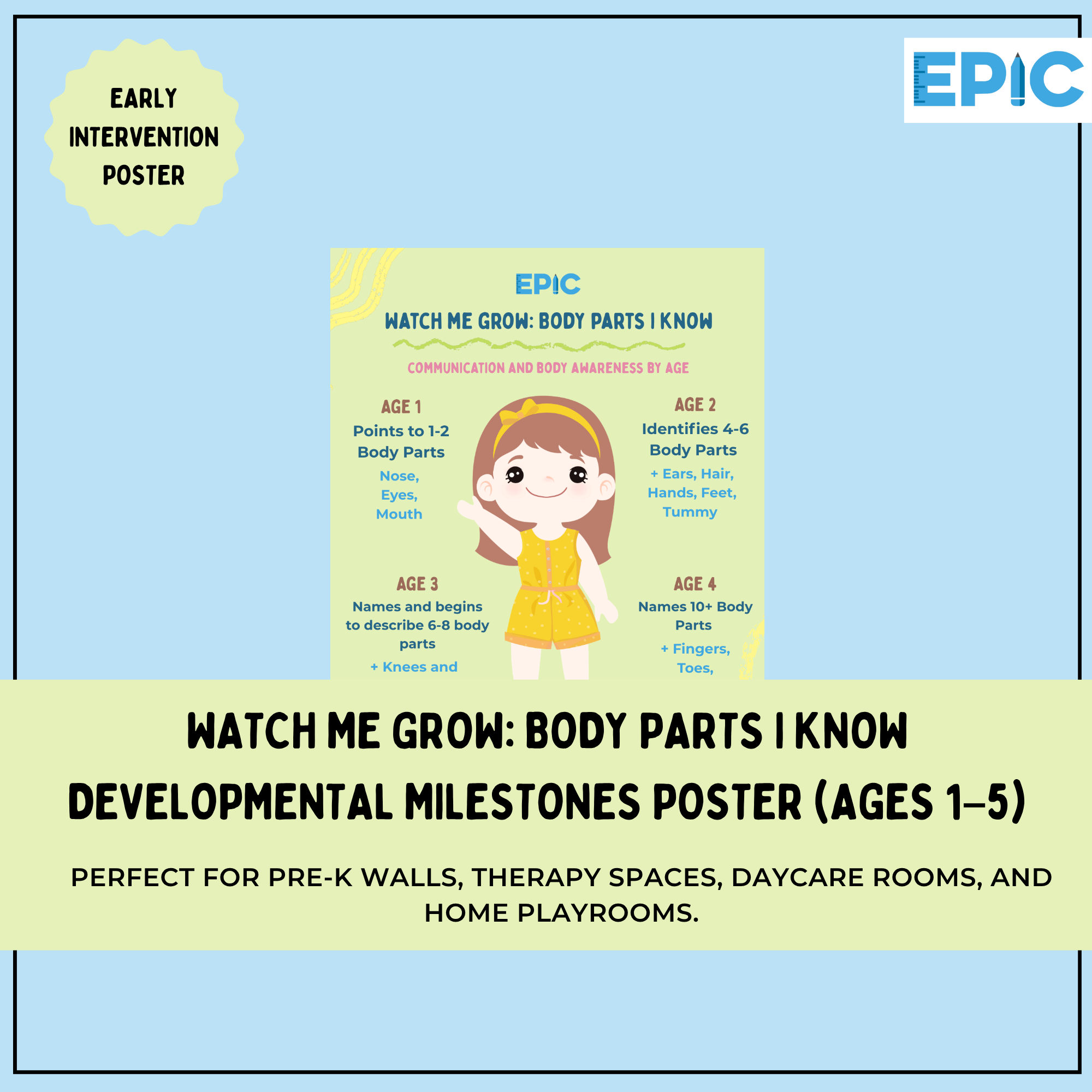
Help your child build strong communication and body awareness skills from the very beginning with this engaging, developmentally-aligned poster: “Watch Me Grow: Body Parts I Know.”
This visual guide outlines what children typically understand about body parts from ages 1–5, making it easy for parents, caregivers, and educators to track progress and support learning in a meaningful, age-appropriate way.
✨ What’s Included:
Clear developmental milestones for body part identification by age
Simple, relatable examples (nose, eyes, hands, knees, shoulders, and more)
Progression from pointing → identifying → naming → describing
Bright, child-friendly design that encourages engagement and conversation
🧠 Why It Matters:
Understanding and naming body parts is a foundational skill that supports language development, following directions, body awareness, and early academic readiness. This poster helps you see what to expect and know how to support it through everyday interactions.
👩👧 Perfect For:
Parents and caregivers
Pediatric therapists (OT, PT, SLP)
Daycares and early childhood classrooms
Playrooms, therapy spaces, or homeschool environments
Help your child build strong communication and body awareness skills from the very beginning with this engaging, developmentally-aligned poster: “Watch Me Grow: Body Parts I Know.”
This visual guide outlines what children typically understand about body parts from ages 1–5, making it easy for parents, caregivers, and educators to track progress and support learning in a meaningful, age-appropriate way.
✨ What’s Included:
Clear developmental milestones for body part identification by age
Simple, relatable examples (nose, eyes, hands, knees, shoulders, and more)
Progression from pointing → identifying → naming → describing
Bright, child-friendly design that encourages engagement and conversation
🧠 Why It Matters:
Understanding and naming body parts is a foundational skill that supports language development, following directions, body awareness, and early academic readiness. This poster helps you see what to expect and know how to support it through everyday interactions.
👩👧 Perfect For:
Parents and caregivers
Pediatric therapists (OT, PT, SLP)
Daycares and early childhood classrooms
Playrooms, therapy spaces, or homeschool environments